What is E 509?
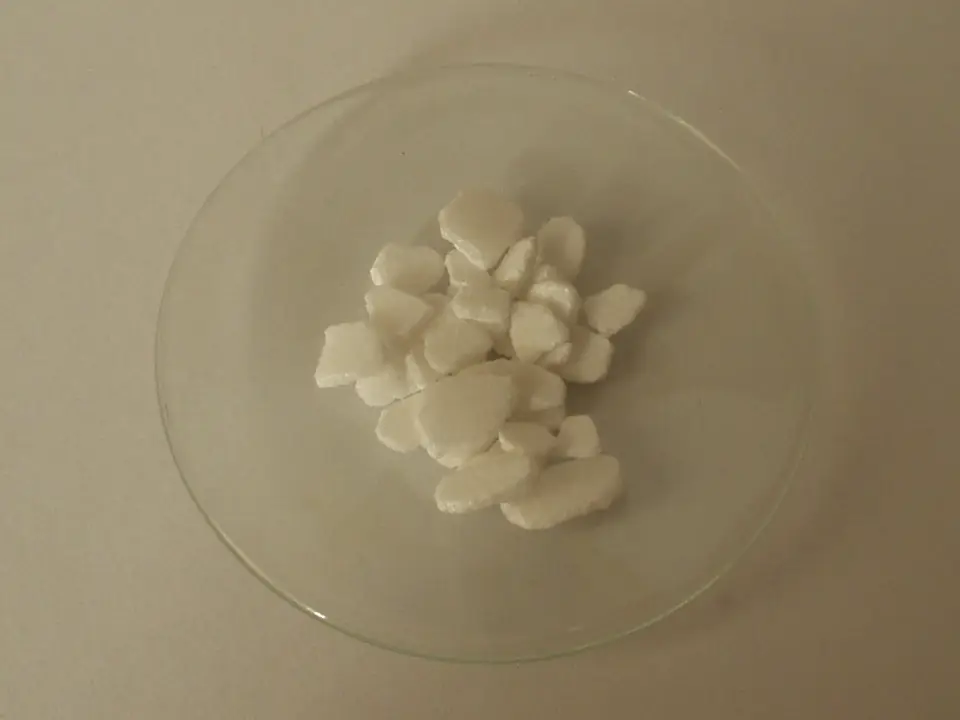
E 509 is the E number of Calcium chloride. Mineral salt used as a firming agent, for example in canned fruit and vegetables and in cheesemaking.
Where is E 509 most commonly used?
Calcium chloride mainly keeps canned vegetables and fruit such as gherkins or tomatoes firm. In cheesemaking it is added to milk so that it curdles better.
What is E 509 used for?
E 509 belongs to the group "Other additives" and is used as firming agent.
- Firming agent: Firming agents keep fruit or vegetables firm and crisp.
Which foods may contain E 509?
According to the European Commission's database, E 509 may be used in 75 food categories and subcategories, each only in specific products and usually with maximum levels. The categories come from these areas:
- Dairy products and analogues
- Fats and oils and fat and oil emulsions
- Edible ices
- Fruit and vegetables
- Confectionery
- Cereals and cereal products
- Bakery wares
- Meat
- Fish and fisheries products
- Eggs and egg products
- Sugars, syrups, honey and table-top sweeteners
- Salts, spices, soups, sauces, salads and protein products
- Foods for specific groups (infants, young children, special medical purposes)
- Beverages
- Ready-to-eat savouries and snacks
- Desserts
- Food supplements
- Processed foods not covered by categories 1 to 17
Is E 509 vegan?
Usually yes: the substance is normally made from plant, mineral or synthetic raw materials or with microorganisms. In individual cases, only the manufacturer or a vegan label can give certainty.
Is E 509 linked to genetic engineering?
No typical link to genetic engineering is known for this substance: it is not usually obtained from plants for which GM varieties exist, nor produced by fermentation.
How does E 509 appear on the label?
In the list of ingredients, the substance appears with its function, followed by the E number or the name, for example "Firming agent: E 509" or "Firming agent: Calcium chloride".
Sources
- Regulation (EC) No 1333/2008, consolidated version of 18.08.2026, Annexes I and II, EUR-Lex
- Food Additives Database, European Commission (accessed 19 October 2026)